
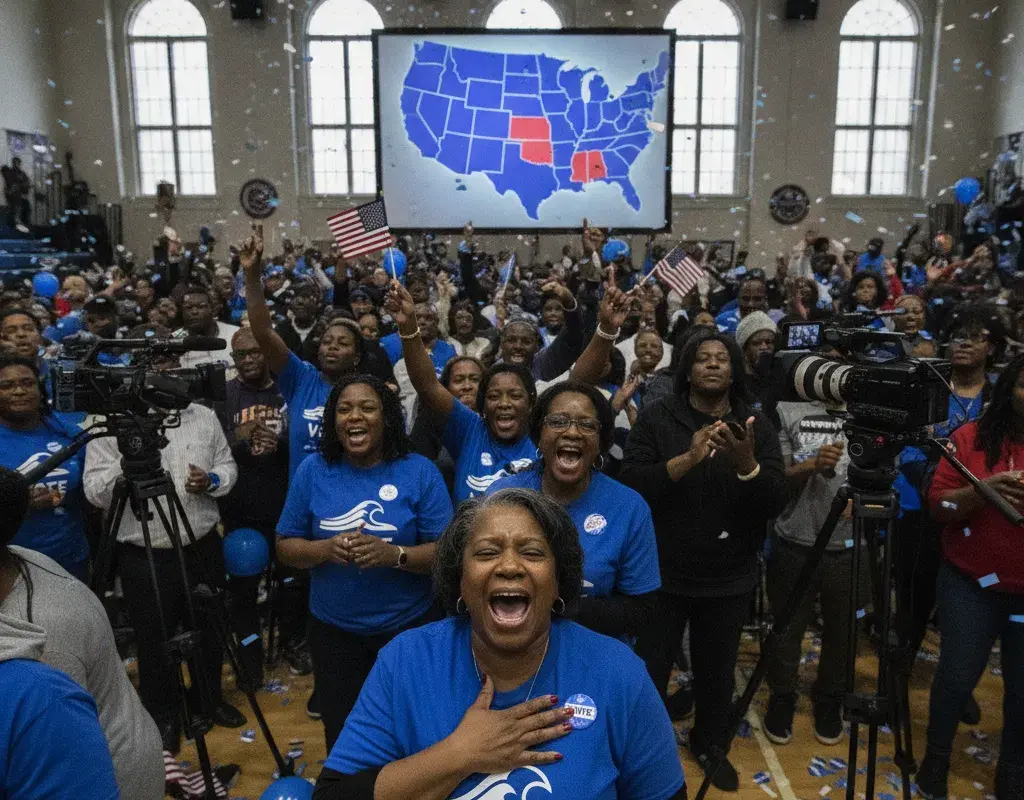
The landscape of American politics has undergone a seismic shift following Tuesday’s midterm elections, signaling that any viable path to national power must now pass through the South. In a stunning reversal of expectations, Democrats managed to flip critical Senate seats in Texas, North Carolina, and South Carolina, while leaving Mississippi in a nail-biting deadlock. This surge was fueled largely by a historic spike in Black voter turnout, as citizens responded to economic pressures and recent judicial rulings on voting rights with an unprecedented push toward the polls.
This momentum extended far beyond federal races, creating a cascading effect that dismantled long standing Republican strongholds at the state level. Georgia witnessed a total sweep of its statewide offices, highlighted by the election of Keisha Lance Bottoms as the nation’s first Black woman governor. Similar trends emerged across the region, with Democrats seizing control of the Texas state House and eroding Republican supermajorities in Florida and South Carolina. Even in deeply red territories like Alabama and Arkansas, Democratic candidates secured surprising gains that suggest the traditional partisan divide is blurring.
Republican strategies to insulate themselves through aggressive redistricting largely backfired. Efforts to carve out safe seats in states like Tennessee and Alabama failed to stop determined challengers who capitalized on widespread dissatisfaction with inflation and government corruption. For many voters, particularly those who had previously remained politically disengaged, the intersection of rising living costs and threats to voting access turned politics into a personal matter that could no longer be ignored.
As both parties begin to eye the 2028 presidential cycle, the strategic importance of the Sun Belt has never been clearer. With Texas, Florida, Georgia, and North Carolina accounting for over a third of the electoral college votes required for victory, these states have become the primary battlegrounds for future contenders. From high profile visits by figures like Pete Buttigieg to targeted campaigns by Ted Cruz and JD Vance, it is evident that whoever can master the evolving demographics of the South will likely hold the keys to the White House.